Pages

Wednesday, February 20, 2013

Yeats, Auden, and Dancing

From Ingmar Bergman's film 'The Seventh Seal'
The image of dance has a remarkable power upon the human psyche. Euripides writes of the mantic dancing of the Bacchae, as they parade the head of Pentheus. Orpheus was destroyed by the dancing Maenads. The 'danse macabre' was a trope of Medieval art, music, and literature. Stravinsky's 'Rite of Spring' caused rioting in the streets. In his film, 'The Seventh Seal,' Ingmar Bergman interlaces Medieval dance imagery with modern cinematography, ending his cerebral film with a reenactment of the Dance of Death. And, McCarthy's novel, Blood Meridian, ends with a wild dance in which we are invited to partake by an assortment of unsavory and even terrifying characters. 
Perhaps dance is so powerful an image because it contains within it both a beautiful expression of joie-de-vivre and a terrifying nullification of self. It celebrates the triumph of body over mind, encouraging the unconscious self to seek expression in the wild flailing of limbs. Yet, dance is not necessarily the Bacchic backlash against Apollinian order. The child dancing in the wind does not feel the darkness of Dionysian revelry. For her, dance and day are in perfect harmony. So, without further ado, I give you W.B. Yeats' poem:

To a Child dancing in the Wind 

I

D
ANCE there upon the shore;
What need have you to care
For wind or water’s roar?
And tumble out your hair
That the salt drops have wet;         
Being young you have not known
The fool’s triumph, nor yet
Love lost as soon as won,
Nor the best labourer dead
And all the sheaves to bind.
What need have you to dread
The monstrous crying of wind?
  
II

Has no one said those daring
Kind eyes should be more learn’d?
Or warned you how despairing
The moths are when they are burned,
I could have warned you, but you are young,
So we speak a different tongue.
  
O you will take whatever’s offered
And dream that all the world’s a friend,
Suffer as your mother suffered,
Be as broken in the end.
But I am old and you are young,
And I speak a barbarous tongue.

I will let Yeats speak for himself. But, I would like to balance Yeats' poem with another approach to the subject. In his poem, 'Death's Echo', also known by its first line, W. H. Auden contrasts, as Yeats does, the impulse to dance and the travails of living.


Death's Echo

"O who can ever gaze his fill,"
Farmer and fisherman say,
     "On native shore and local hill,
     Grudge aching limb or callus on the hand?
     Father, grandfather stood upon this land,
     And here the pilgrims from our loins will stand."
     So farmer and fisherman say
     In their fortunate hey-day:
     But Death's low answer drifts across
     Empty catch or harvest loss
     Or an unlucky May.
     The earth is an oyster with nothing inside it,
     Not to be born is the best for man;
     The end of toil is a bailiff's order,
     Throw down the mattock and dance while you can.

     "O life's too short for friends who share,"
     Travellers think in their hearts,
     "The city's common bed, the air,
     The mountain bivouac and the bathing beach,
     Where incidents draw every day from each
     Memorable gesture and witty speech."
     So travellers think in their hearts,
     Till malice or circumstance parts
     Them from their constant humour:
     And slyly Death's coercive rumour
     In that moment starts.
     A friend is the old old tale of Narcissus,
     Not to be born is the best for man;
     An active partner in something disgraceful,
     Change your partner, dance while you can.

     "O stretch your hands across the sea,"
     The impassioned lover cries,
     "Stretch them towards your harm and me.
     Our grass is green, and sensual our brief bed,
     The stream sings at its foot, and at its head
     The mild and vegetarian beasts are fed."
     So the impassioned lover cries
     Till the storm of pleasure dies:
     From the bedpost and the rocks
     Death's enticing echo mocks,
     And his voice replies.
     The greater the love, the more false to its object,
     Not to be born is the best for man;
     After the kiss comes the impulse to throttle,
     Break the embraces, dance while you can.

     "I see the guilty world forgiven,"
     Dreamer and drunkard sing,
     "The ladders let down out of heaven,
     The laurel springing from the martyr's blood,
     The children skipping where the weeper stood,
     The lovers natural and the beasts all good."
     So dreamer and drunkard sing
     Till day their sobriety bring:
     Parrotwise with Death's reply
     From whelping fear and nesting lie,
     Woods and their echoes ring.
     The desires of the heart are as crooked as corkscrews,
     Not to be born is the best for man;
     The second-best is a formal order,
     The dance's pattern; dance while you can.


     Dance, dance for the figure is easy,
     The tune is catching and will not stop;
     Dance till the stars come down from the rafters;
     Dance, dance, dance till you drop.


Tuesday, February 5, 2013

Plato and Benardete

Seth Benardete from his Commentary on Plato's Symposium:

"Pride made man scale heaven, shame made him realize his defectiveness. Eros, then, is an ever-to-be-thwarted longing for a second try on heaven. We turn to each other in lieu of our rebellion against the gods." 

And from the Symposium itself: 

"For wisdom is one of the most beautiful things, and Eros is love in regard to the beautiful; and so Eros is--necessarily--a philosopher; and as a philosopher he is between being wise and being without understanding." (from Mr. Benardete's translation, 204b)

Does this mean we turn to philosophy in lieu of rebelling against the gods?

And again from the Symposium:

"And after these pursuits, he must lead [the beloved] on to the sciences, so that he [himself, the lover] may see the beauty of sciences, and in looking at the beautiful, which is now so vast, no longer be content like a lackey with the beauty in one, of a boy, of some human being, or of one practice, nor be a sorry sort of slave and petty calculator; but with a permanent turn to the vast open sea of the beautiful, behold it and give birth--in ungrudging philosophy--to many beautiful and magnificent speeches and thoughts..." (210c-d)

Thus, we must not be content with the beauty of an individual or of an activity/practice. This seems to suggest that philosophic activity is not the aim of eros, rather it is a side-effect of it. And yet, one is to give birth in ungrudging philosophy. And, one is to give birth to speeches and thoughts. Speeches to what purpose? One does not simply speak without purpose. Does this mean there is an implicit aim behind philosophy? Is philosophy different from philosophic activity? Why this emphasis on beauty? Isn't Socrates concerned with the good, not the beautiful? What is the difference?  

Comments would be appreciated. 

Sunday, February 3, 2013

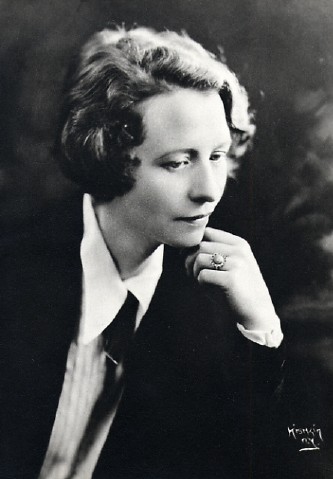
Edna St. Vincent Millay

Edna St. Vincent Millay was born in 1898 and died in 1950. Raised by a strong mother, who divorced her incompetent father, Millay grew up, reading classical literature and scoffing at the demands of authority. Perhaps as a result of her unconventional upbringing, Millay continued to flout the demands society placed on women. She was openly bisexual and turned down Edmund Wilson's (her editor) proposal of marriage because she feared domesticity would inhibit her development as an artist. Millay displayed an immense vivacity and plunged herself into her experiences unreservedly. Perhaps as a result of her uninhibited thirst for life and the longing for fulfillment that such a lifestyle connotes, Millay developed a remarkable ability to capture an immense sense of loss and incompletion. This ability is vividly evident in the poems quoted below. (For a more detailed bio, see: http://www.poetryfoundation.org/bio/edna-st-vincent-millay)


What lips my lips have kissed, and where, and why

What lips my lips have kissed, and where, and why
I have forgotten, and what arms have lain
Under my head till morning; but the rain
Is full of ghosts tonight, that tap and sigh
Upon the glass and listen for reply,
And in my heart there stirs a quiet pain
For unremembered lads that not again
Will turn to me at midnight with a cry.
Thus in the winter stands the lonely tree,
Nor knows what birds have vanished one by one,
Yet knows its boughs more silent than before:
I cannot say what loves have come and gone,
I only know that summer sang in me
A little while, that in me sings no more. 

[I would call this poem a lament, a lament for the self. What does the poet know? Nothing, except that something lovely and happy has gone out of her. And so, she laments, not for her forgotten lads, but for past selves, forgotten and lost, that tap and sigh upon the glass.]


What Savage Blossom

Do I not know what savage blossom only under the pitting hail
Of your inclement season could have prospered? Here lie
Green leaves to wade in. And of the many roads not one road 
    leading outward from this place
But is blocked by boughs that will hiss and simmer when they 
    burn--green autumn, lady, green autumn on this land!

Do I not know what inward pressure only could inflate its petals 
    to withstand
(No, no, not hate, not hate) the onslaught of a little time with 
    you?

(No, no, not love, not love) Call it by name,
Now that it's over, now that it is gone and cannot hear us.

It was an honest thing. Not noble. Yet no shame.

[This poem also connotes a kind of grief. It is a concession to the poet's weakness; she herself is no savage blossom. Which makes us ask, what is she? An ordinary blossom? Lovely and fragile. I've often looked at my rose bushes after the rain and loved how red the ground became from bruised petals. But even in the bringing forth of a new beauty, the old one is destroyed. The blossom is broken by the rain, by the hail. So, we are left with a broken poet, who boldly proclaims that there is no shame. But, why, if there is no shame, we ask, must she so boldly announce it?]

Tuesday, January 29, 2013

Ophélie

Ophelia by John William Waterhouse
I once had a disagreement with my professor over the character of Ophelia. He, rather callously, maintained that she was a weak, even immoral, character, because she betrayed Hamlet's confidence for her father. This, to me, seemed a foolishly modern view of her. What's a young lady to do, caught between an eccentric and insane lover, her bonds of filial piety, and her duty to the court? Perhaps, she didn't deal with her situation as successfully as she could have, but that is a part of her character, and, were she any different, she would not be the lovely Ophelia. 

One of the most enchanting descriptions of Ophelia is Arthur Rimbaud's delightful poem "Ophélie". The poet has such tenderness for the young woman, her situation, and her child's heart. It illumines the result of throwing a barely adolescent into a world of politics, of duty, in short, of men. What could she do when her pale knight laid his head on her knee and spurned her even while courting her? 


Below I provide the original French and a fairly literal translation of my own. 


I

Sur l'onde calme et noire où dorment les étoiles
La blanche Ophélia flotte comme un grand lys,
Flotte très lentement, couchée en ses longs voiles...
- On entend dans les bois lointains des hallalis.


Voici plus de mille ans que la triste Ophélie
Passe, fantôme blanc, sur le long fleuve noir
Voici plus de mille ans que sa douce folie
Murmure sa romance à la brise du soir


Le vent baise ses seins et déploie en corolle
Ses grands voiles bercés mollement par les eaux ;
Les saules frissonnants pleurent sur son épaule,
Sur son grand front rêveur s'inclinent les roseaux.


Les nénuphars froissés soupirent autour d'elle ;
Elle éveille parfois, dans un aune qui dort,
Quelque nid, d'où s'échappe un petit frisson d'aile :
- Un chant mystérieux tombe des astres d'or


II

O pâle Ophélia ! belle comme la neige !
Oui tu mourus, enfant, par un fleuve emporté !
C'est que les vents tombant des grand monts de Norwège
T'avaient parlé tout bas de l'âpre liberté ;


C'est qu'un souffle, tordant ta grande chevelure,
À ton esprit rêveur portait d'étranges bruits,
Que ton coeur écoutait le chant de la Nature
Dans les plaintes de l'arbre et les soupirs des nuits ;


C'est que la voix des mers folles, immense râle,
Brisait ton sein d'enfant, trop humain et trop doux ;
C'est qu'un matin d'avril, un beau cavalier pâle,
Un pauvre fou, s'assit muet à tes genoux !


Ciel ! Amour ! Liberté ! Quel rêve, ô pauvre Folle !
Tu te fondais à lui comme une neige au feu :
Tes grandes visions étranglaient ta parole

- Et l'Infini terrible éffara ton oeil bleu !

III

- Et le Poète dit qu'aux rayons des étoiles
Tu viens chercher, la nuit, les fleurs que tu cueillis ;
Et qu'il a vu sur l'eau, couchée en ses longs voiles,
La blanche Ophélia flotter, comme un grand lys.


I

On the wave calm and black, where sleep the stars
The White Ophelia floats like a great lily
floats so slow, couched in her long veils
- You hear in the distant woods halloes.

Here more than a thousand years sad Ophelia
passes, white fantom, on the long black flood.
Here more than a thousand years her sweet folly
murmurs her romance to the evening breeze.

The wind kisses her breasts and arranges her
veils great as a crown, rocked gently by the waters;
the trembling willows weep on her shoulder,
the roses bow to her dreamer’s forehead.

The crumpled waterlillies sigh around her;
She awakens awhile, caught in a sleeping alder,
some nymph, from whom escapes the tiny shiver of a wing:
- A mysterious song falls from the golden stars.

II

O pale Ophelia! Lovely as the snow!
Yes, you died, child, carried off by the flood!
It was just the winds falling from the mountains of Norway
that spoke so softly of bitter freedom;

It was just a breeze, twisting your hair,
that brought strange sounds to your dreamer’s soul,
just that your heart listened to Nature’s song
in the groans of a tree and the sighs of night;

It was just that the voice of crazed seas, an immense rale,
Broke your child’s breast, too human, too sweet;
It was just that on an April morning, a pale, handsome knight,
a poor fool, sat silent at your knees!

Oh Heaven! Love! Liberty! What a dream, poor fool!
You melted to him as snow to fire:
your great visions strangled your speech
- And the terrible Infinite stunned your blue eyes!

III

- And the Poet says that in the regions of the stars
You come searching, at night, the flowers that you gathered;
And that he saw on the water, couched in her long veils,
White Ophelia floating, like a great lily.


Wednesday, January 23, 2013

Nabokov "In My Youth" or "We So Firmly Believed"

While looking Nabokov's Russian poetry and translations on the web, I came across this lovely blogpost, which is certainly worth sharing. Apart from how delightful Nabokov's voice is, this post is wonderful because it provides us with two versions of Nabokov's translation, the first as a very young man and the second as a more mature artist. 


To My Youth
We used to believe so firmly, you and I, in the unity
of existence; but now I glance back–and it is
astounding–how impersonal in color, how unreal in
pattern you have become, my youth.

When one examines the matter, it is like the haze of
a wave between me and you, between the shallows and the
drowning–or else I see a receding highway, and you
from behind as you pedal right into the sunset on your semi-racer.

You are no more myself, you’re a mere outline, the subject
of any first chapter–but how long we believed
in the oneness of the way from the damp gorge
to the mountain heather.


We So Firmly Believed
We so firmly believed in the linkage of life,
but now I’ve looked back–and it is astonishing
to what a degree you, my youth,
seem in tints not mine, in traits not real.

If one probes it, it’s rather like a wave’s haze
between me and you, between shallow and sinking,
or else I see telegraph poles and you from the back
as right into the sunset you ride your half-racer.

You’ve long ceased to be I. You’re an outline–the hero
of any first chapter; yet how long we believed
that there was no break in the way from the damp dell
to the alpine heath.

The first version is a bit clumsy, but the second is delightful. The refinement in style crystalizes the refinement in thought. Although I myself am in no position to look back upon my youth and meditate upon the caprices of time, I can certainly find Nabokov's words an immense encouragement. As we wrestle the angels of our disappointments, we cannot even imagine returning to a cheerier world, where the sun shines upon the heather. And yet, with this poem, Nabokov reminds the young and the heartbroken that such a place exists and that our current experiences are just the starting points of the path to that place.
A friend and teacher of mine commented that by 'alpine heath,' Nabokov means the Olympian Heights and is thus making a claim not dissimilar from Horace in Ode 1.1. And although Nabokov may be hubristic (and talented) enough to make such a claim, I am inclined to believe that he is speaking more as a human being and less as an artist. Nabokov wrote this poem as an exile from Russia. One can only imagine the immense weight of despair he must have felt at the prospect of a life of exile. And yet, in his exile, perhaps even on account of his exile, Nabokov was able to emerge as one of the most gifted writers of the twentieth century. 
My mother has told me now and again of the distance she feels when reflecting upon her youth. How like another life it is to her. How, when she emerged from the courthouse after her divorce, she could not even imagine the family and love she has now. In this poem, Nabokov is not simply boasting of his artistic and literary achievements, he is commenting upon human nature. As Pascal reiterates again and again in his Pensees, our perspective is so limited; we lack the means of fully understanding anything. Whether or not you find this a convincing point of view, you must certainly find it convincing a propos of our future. How unknowable it is! And yet, how much we long to know it! 

Tuesday, December 11, 2012

Just in time for finals....

Just in case any of you were feeling too happy, here's an Emily Dickenson poem. It really just speaks for itself. 


I heard a fly buzz when I died;
      The stillness round my form
Was like the stillness in the air
      Between the heaves of storm.


The eyes beside had wrung them dry,
      And breaths were gathering sure
For that last onset, when the king
      Be witnessed in his power.


I willed my keepsakes, signed away
      What portion of me I
Could make assignable,-and then
      There interposed a fly,


With blue, uncertain, stumbling buzz,
      Between the light and me;
And then the windows failed, and then
      I could not see to see.


Friday, December 7, 2012

New Poet Laureate...

Browsing The Poetry Foundation today, I discovered that we have a new poet laureate. And, she is LA's first poet laureate. Congratulations, LA! Congratulations, Eloise Klein Healy! So, for your reading fancy, I provide below a couple examples of her poetry. 

Asking About You

Instead of having sex all the time I like to hold you and not get into some involved discussion of what life means. I want you to tell me something I don't know about you. Something about the day before that photograph in which you're standing on your head. I want to know about softball and the team picture. Why are you so little next to the others? Were you younger? Were you small as a girl? What I want most is to have been a girl with you and played on the opposite team so I could have liked you and competed against you at the same time. 

[I guess part of being poet laureate means expressing l'esprit du temps. And, the angst Healy describes in the above poem seems to express well the difficulty of relationships that our hyper-sexualized culture has created for many of us. As sex ceases to be an expression of intimacy, it is less desirable to those who long for intimacy. Our brash confessionalism, whether it be in our brazen attitude towards sexuality or our desire to flaunt our lives and opinions on social networks, seems to have crushed much of our capacity for tenderness and intimacy. I only hope, for Ms. Healy's sake, that this poem is not actually about her life.
Content aside, the poem does little to inspire. To begin with, prose poetry is a dangerous road to go down. It is too easy to slip into writing a journal entry and calling it a poem. This poem lacks the lyricism and sensory power [i.e. the ability to convey convincingly sensory impressions] that are necessary to call a poem a poem. Furthermore, it is so lost in the narrator's experience that it forgets about the human experience, which should be at the bottom of every poem. For, why should your reader be obliged to read your work, unless it can move them or teach them? The author, not the reader, has an obligation to make his work worthwhile. I fear that this poem lays too much of the onus of appreciation upon the reader....]

Living Here Now

My father's dying
resembles nothing so much
as a small village
building itself
in the mind of a traveler
who reads about it
and thinks to go there.

The journey is imagined
in a way not even felt
as when years ago
I knew my father would die someday.

The idea came up as fast
as a curve in the road
which opens out
to an unexpected vista,

and now in this journey
the road gravel crunches
under my tires. I miss
some of the streets,
get lost, get lost. 

I find I'm no tourist anymore
and settle into the oldest human assignment.
Bury your father and live forever
as a stranger in that town. 

[This poem is, altogether, more interesting than the first. It conveys the sadness and complacency of loss. What can one do in the face of death? It leaves us feeling lost and quietly submissive, much like the rhythm of the poem. And, the image of the road and of travel is compelling, especially in regards to the theme of mortality. The final couplet "Bury your father and live forever / as a stranger in that town" lend a universality to the poem. What have we been doing but burying our fathers and continuing for all these millennia?
And yet, the metaphor of the road has become not a little hackneyed over the years. The images, while descriptive, are a bit trite (we're all travelers... ah yes, I forgot.). And again, I feel the weight of appreciation dumped at my feet. Ms. Healy gives one no reason to want her poetry, except the sense of artistic guilt one feels when one does not appreciate something appreciated by the "wise."]