Pages

Showing posts with label grief. Show all posts

Sunday, February 3, 2013

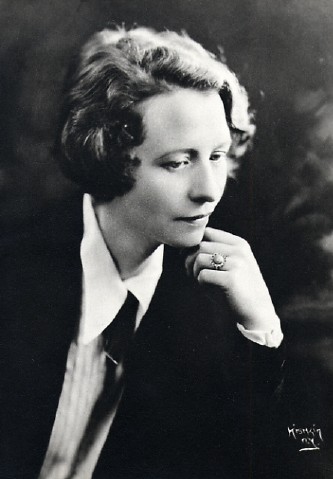
Edna St. Vincent Millay

Edna St. Vincent Millay was born in 1898 and died in 1950. Raised by a strong mother, who divorced her incompetent father, Millay grew up, reading classical literature and scoffing at the demands of authority. Perhaps as a result of her unconventional upbringing, Millay continued to flout the demands society placed on women. She was openly bisexual and turned down Edmund Wilson's (her editor) proposal of marriage because she feared domesticity would inhibit her development as an artist. Millay displayed an immense vivacity and plunged herself into her experiences unreservedly. Perhaps as a result of her uninhibited thirst for life and the longing for fulfillment that such a lifestyle connotes, Millay developed a remarkable ability to capture an immense sense of loss and incompletion. This ability is vividly evident in the poems quoted below. (For a more detailed bio, see: http://www.poetryfoundation.org/bio/edna-st-vincent-millay)


What lips my lips have kissed, and where, and why

What lips my lips have kissed, and where, and why
I have forgotten, and what arms have lain
Under my head till morning; but the rain
Is full of ghosts tonight, that tap and sigh
Upon the glass and listen for reply,
And in my heart there stirs a quiet pain
For unremembered lads that not again
Will turn to me at midnight with a cry.
Thus in the winter stands the lonely tree,
Nor knows what birds have vanished one by one,
Yet knows its boughs more silent than before:
I cannot say what loves have come and gone,
I only know that summer sang in me
A little while, that in me sings no more. 

[I would call this poem a lament, a lament for the self. What does the poet know? Nothing, except that something lovely and happy has gone out of her. And so, she laments, not for her forgotten lads, but for past selves, forgotten and lost, that tap and sigh upon the glass.]


What Savage Blossom

Do I not know what savage blossom only under the pitting hail
Of your inclement season could have prospered? Here lie
Green leaves to wade in. And of the many roads not one road 
    leading outward from this place
But is blocked by boughs that will hiss and simmer when they 
    burn--green autumn, lady, green autumn on this land!

Do I not know what inward pressure only could inflate its petals 
    to withstand
(No, no, not hate, not hate) the onslaught of a little time with 
    you?

(No, no, not love, not love) Call it by name,
Now that it's over, now that it is gone and cannot hear us.

It was an honest thing. Not noble. Yet no shame.

[This poem also connotes a kind of grief. It is a concession to the poet's weakness; she herself is no savage blossom. Which makes us ask, what is she? An ordinary blossom? Lovely and fragile. I've often looked at my rose bushes after the rain and loved how red the ground became from bruised petals. But even in the bringing forth of a new beauty, the old one is destroyed. The blossom is broken by the rain, by the hail. So, we are left with a broken poet, who boldly proclaims that there is no shame. But, why, if there is no shame, we ask, must she so boldly announce it?]

Friday, December 7, 2012

New Poet Laureate...

Browsing The Poetry Foundation today, I discovered that we have a new poet laureate. And, she is LA's first poet laureate. Congratulations, LA! Congratulations, Eloise Klein Healy! So, for your reading fancy, I provide below a couple examples of her poetry. 

Asking About You

Instead of having sex all the time I like to hold you and not get into some involved discussion of what life means. I want you to tell me something I don't know about you. Something about the day before that photograph in which you're standing on your head. I want to know about softball and the team picture. Why are you so little next to the others? Were you younger? Were you small as a girl? What I want most is to have been a girl with you and played on the opposite team so I could have liked you and competed against you at the same time. 

[I guess part of being poet laureate means expressing l'esprit du temps. And, the angst Healy describes in the above poem seems to express well the difficulty of relationships that our hyper-sexualized culture has created for many of us. As sex ceases to be an expression of intimacy, it is less desirable to those who long for intimacy. Our brash confessionalism, whether it be in our brazen attitude towards sexuality or our desire to flaunt our lives and opinions on social networks, seems to have crushed much of our capacity for tenderness and intimacy. I only hope, for Ms. Healy's sake, that this poem is not actually about her life.
Content aside, the poem does little to inspire. To begin with, prose poetry is a dangerous road to go down. It is too easy to slip into writing a journal entry and calling it a poem. This poem lacks the lyricism and sensory power [i.e. the ability to convey convincingly sensory impressions] that are necessary to call a poem a poem. Furthermore, it is so lost in the narrator's experience that it forgets about the human experience, which should be at the bottom of every poem. For, why should your reader be obliged to read your work, unless it can move them or teach them? The author, not the reader, has an obligation to make his work worthwhile. I fear that this poem lays too much of the onus of appreciation upon the reader....]

Living Here Now

My father's dying
resembles nothing so much
as a small village
building itself
in the mind of a traveler
who reads about it
and thinks to go there.

The journey is imagined
in a way not even felt
as when years ago
I knew my father would die someday.

The idea came up as fast
as a curve in the road
which opens out
to an unexpected vista,

and now in this journey
the road gravel crunches
under my tires. I miss
some of the streets,
get lost, get lost. 

I find I'm no tourist anymore
and settle into the oldest human assignment.
Bury your father and live forever
as a stranger in that town. 

[This poem is, altogether, more interesting than the first. It conveys the sadness and complacency of loss. What can one do in the face of death? It leaves us feeling lost and quietly submissive, much like the rhythm of the poem. And, the image of the road and of travel is compelling, especially in regards to the theme of mortality. The final couplet "Bury your father and live forever / as a stranger in that town" lend a universality to the poem. What have we been doing but burying our fathers and continuing for all these millennia?
And yet, the metaphor of the road has become not a little hackneyed over the years. The images, while descriptive, are a bit trite (we're all travelers... ah yes, I forgot.). And again, I feel the weight of appreciation dumped at my feet. Ms. Healy gives one no reason to want her poetry, except the sense of artistic guilt one feels when one does not appreciate something appreciated by the "wise."]

Sunday, December 2, 2012

Time Does Not Bring Relief: You All Have Lied

In Horace's ode 1.24, he reminds Vergil that all things pass with time, even grief. This seems to be a universally parroted maxim, yet Edna St. Vincent Millay boldly denies this in her poem for which this post is titled: 

Time does not bring relief: you all have lied
Who told me time would ease me of my pain!
I miss him in the weeping of the rain;
I want him at the shrinking of the tide;
The old snows melt from every mountain-side,
And last year's leaves are smoke in every lane;
But last year's bitter loving must remain
Heaped on my heart, and my old thoughts abide. 
There are a hundred places where I fear
To go,--so with his memory they brim.
And entering with relief some quiet place
Where never fell his foot or shone his face
I say, "There is no memory of him here!"
And so stand stricken, so remembering him.

Reading the poem, one wonders whether time may really bring relief. Perhaps, Edna didn't wait long enough, perhaps Vergil kept waiting and lamenting his dear Quintilius 'til he himself was lamented. The wound may cease to hurt, but the scar remains. Do we moderns, perhaps, in our hubris and quick escapes from suffering expect that emotional suffering should be the same as physical suffering? Short and without trace.