Pages

Friday, January 16, 2015

Sleeplessness. Homer.

I bought Robert Tracy's translation of Stone by Mandelstam after reading Seamus Heaney's review of it, and it's really quite lovely. For instance, Tracy's translation of "Бессоница. Гомер." one of the most famous poems from Stone and one I particularly enjoy is without a doubt the best published translation of it I have read (which isn't actually saying a lot, given the dearth of good translations of Mandelstam). Below I give the Russian: 

Бессоница. Гомер. Тугие паруса. 
Я список корвблей прочел до середины:
Сей длинный выводок, сей поезд журавлиный,
Что над Элладою когда-то поднялся.

Как журавлиный клин в чужие рубежи--
На головах царей божественная пена--
Куда плывете вы? Когда бы не Елена,
Что Троя вам одна, ахейские мужи?

И море, и Гомер--все движется любовью.
Кого же слушать мне? И вот Гомер молчит,
И море черное, витийствуя, шумит
И с тяжким грохотом подходит к изголовью.

My own rough, literal translation (I just wanted to give non-Russian speakers a line-by-line translation of the poem. This is not intended to be a poetic translation. To the extent possible, I maintained the Russian grammar):

Sleeplessness. Homer. Stretched sails. 
I read the catalogue of ships through the middle:
That long flock, that train of cranes,
that once took flight over Greece. 

Like a wedge of cranes towards strange borders--
On princes' heads the godlike spume--
Where are you sailing? Were there no Helen, 
What would be a single Troy to you, Achaean husbands? 

And the sea, and Homer--everything moves by love. 
To whom should I listen? And lo, Homer is silent,
And the black sea, rhapsodizing, thunders 
And with a heavy growl draws near to my pillow. 

There are a couple places that require attention. I translated мужи (muzhi) as husbands, because, while muzh at the most fundamental level does mean simply "man". In modern Russian, muzh is much more closely associated with the idea of "husband" than "man" in the abstract. I think, however, that Mandelstam wants us to have both meanings in mind (which is very Greek of him). The line, "everything moves by love" in Russian has what is essentially the equivalent of the Greek middle. Thus everything is moved by love and moves itself through love (the Russian uses the instrumental case, thus not specifying exactly what the connection of movement and love is). I love that in a poem about Homer, Mandelstam uses eccentricities of the Russian language that parallel Greek. 

Robert Tracy's translation:

Sleeplessness. Homer. The sails tight.
I have the catalogue of ships half read:
That file of cranes, long fledgling line that spread
And lifted once over Hellas, into flight.

Like a wedge of cranes into an alien place--
The god's spume foaming in the princes' hair--
Where do you sail? If Helen were no there
What would Troy matter, men of Achaean race?

The sea, and Homer--it's love that moves all things.
To whom should I listen? Homer falls silent now
And the black sea surges toward my pillow
Like a loud declaimer, heavily thundering.

As you can see, Tracy's translation takes a lot of liberties, but in general, the liberties serve the purpose of mirroring (imperfectly, of course) the meter and rhyme of the Russian. Tracy's translation, however, starts to unravel (unravel and get caught by its suitors in the act of doing so) in the last two lines. I don't exactly know what it means to thunder heavily like a loud declaimer. The image is unclear and sloppy and ignores the fact that the Russian verb "витийствовать" in addition to declaiming or speechifying has the sense of rhapsodizing. In a poem about Homer, surely Mandelstam wants us to make this connection and realize that, even as Homer falls silent, the black sea takes his place as rhapsode and poet. 

Dmitri Smirnov's translation (from wikisource: http://en.wikisource.org/wiki/Insomnia._Homer._The_rows_of_stretched_sails)

Insomnia. Homer. The rows of stretched sails.
I've read the catalogue of ships just to the middle:
That endless caravan, that lengthy stream of cranes,
Which long ago rose up above the land oh [sic? should be, of, I think] Hellas.

It's like a wedge of cranes towards the distant shores - 
The foreheads of the kings crowned with the foam of Gods.
Where are you sailing to? If Helen were not there,
What Troy would be to you, oh warriors of Achaea[?]

The sea and Homer - everything is moved by love.
Whom shall I listen to? There is no sound from Homer,
And full of eloquence the black sea roars and roars,
And draws with thunderous crashing nearer to my pillow.

Smirnov's translation is just sloppy, not really worth mentioning (but it's one of the few available online!). He adds words that don't need to be added. In line one, for instance, "rows". M. says nothing about rows. In the second line, the addition of "crowned" is a bit of an interpretation on Smirnov's part. Mandelstam simply tells us the foam is there. We can imagine that it is tossed up by the swift passing of ships, that it even seems crownlike upon the foreheads of kings, but that is not explicitly stated. Again in the final stanza, Smirnov assumes that if one can declaim or rhapsodize, one is full of eloquence. But, again, this is Smirnov's interpretation of Mandelstam's words. And, this interpretive tendency strips Mandelstam's imagery of its force. Mandelstam uses a verbal adverb (I translated it as "rhapsodizing"), thus connecting the activity closer to the main verb (thunders) than to the sea. But, Smirnov replaces the action with a noun and adjective combination (full of eloquence). He tries to reinsert the restless activity of Mandelstam's line by repeating "roars", but the result is a bloated line. 

Sunday, January 11, 2015

The Just Man Justices

I regret my prolonged absence from this blog. My silly side project of a fashion blog (http://backwardfashion.blogspot.com/) had been distracting me from TRS for a while. But, when I noticed that some of the posts on this blog, despite not having been updated in a long time continued to get a significant amount of traffic, I decided it was high time to return. 

Over Christmas break, I met up with my friends PLP and GG for drinks. The topic of conversation was a prolonged argument about whether or not language could exist if there were no distinction between seeming and being. It naturally evolved into a conversation about the first couple chapters of Genesis. If Word itself is a creative act on the part of God (which is fascinating if we bear in mind John's words that "In the beginning was the Word, and the Word was with God, and the Word was God."), it is somehow bound up in the thing itself. But, what does it mean for Adam to name the animals? After all, they already exist; God has spoken them into being. So, what can Adam's of appellation give to them? 

If we are not trying to elucidate the obscurity of appearance and reality, why speak? But, Hopkins, in "As Kingfishers Catch Fire," provides an alternative reason for speech: meditation. It can add nothing to the being of a thing but merely palpates what it is. But, curiously, in this meditative speech, the rules of syntax necessarily breakdown. The distinction between verb and noun becomes irrelevant, for a thing is not just what it is, but what it is is what it does. The just man justices. 

As Kingfishers Catch Fire

As kingfisher catch fire, dragonflies draw flame;
As tumbled over rim in roundy wells
Stones ring; like each tucked string tells, each hung bell's
Bow swung finds tongue to fling out broad its name;
Each mortal thing does one thing and the same:
Deals out that being indoors each one dwells;
Selves--goes itself; myself it speaks and spells,
Crying What I do is me: for that I came. 

I say more: the just man justices;
Keeps grace: that keeps all his goings graces;
Acts in God's eye what in God's eye he is--
Christ--for Christ plays in ten thousand places,
Lovely in limbs, and lovely in eyes not his
To the Father through the features of men's faces. 

The poem is magnificently lovely. And, one could not begin to enumerate the lovely and intriguing parts of it. But, one thing that seems particularly relevant to me now is Hopkins' choice of verb. Christ plays in ten thousand places. In Plato's Laws, the Athenian stranger describes education as play; a child must play the part of what he will become in order to learn about it. Christ plays in the nature that He created. God plays in Man. He, who knows all, comes down to us and learns with us. The image of God in the first book of Genesis is movement over the face of the waters. God moves, though there cannot possibly be anything for which he moves. He learns though he knows all. 

Wednesday, March 20, 2013

Gilead: The Conversation of Prayer

I, at length, have finished reading Gilead, Marilynne Robinson's second novel. It is a slow-paced work, calm and contemplative. The novel is told by an aging protestant preacher who knows that he will die before his young son is old enough to really know him. So, he is writing the manuscript, which comprises the novel, for his son's benefit. 

The novel delves into the nature of father-son relationships, not merely the relationship of the narrator and his son, but of other family members and friends as well. Most interestingly, perhaps, it explores the nature of father-son relationships where the two are neither biologically nor legally connected. Robinson, through her flawed but perseverant characters, develops an image of the always-loving, always-pursuing Father, who, knowing all, forgives all. 

Moreover, the novel is not simply exploring human relationships, it also ponders the nature of divine fatherhood, through the lens of human fatherhood. Although the external conflict of the novel remains unresolved, the internal conflict of the narrator is overcome. His anger and ill-will are transformed. And, even though the novel ends much as it began, the reader feels as through he has made a spiritual journey and can reflect upon the shabby reality of the world with newfound love. 

Throughout the work, the narrator ends sections with the comment, 'I'll pray and then I'll sleep.' It becomes a kind of antiphon to the almost liturgical work. Through this antiphonal device, Robinson tightly interweaves the need for prayer and the need for rest. After the narrator delves into the often petty and less-than-perfect parts of his soul and memory, he pulls himself back with the above quoted line. One must have refreshment for body and soul. Sleep and prayer. Prayer and sleep. This sleep is, of course, also, a premonition of death. I'll pray and then I'll die. Into your hands, Lord, I commend my spirit. The act of prayer and the act of death are unified. The combining of prayer and sleep reflect the harmony of the union of body and soul. 

Additionally, by linking prayer to God and direct address to a living human being (the narrator's son), Robinson establishes not so much a monologue, as a conversation. In short, the novel might be called a conversation of prayer. The narrator can converse with his son through prayer; he transcends the temporal limitations of age and death by prayer. Since God is outside of time, by addressing ourselves to God, we can, in a sense, be pulled outside of time as well. The father writing and the son reading are omnipresent in the mind of God; there is no temporal interruption to the conversation of prayer. 

Finally, this brings us around to the title of this post, which is also the title of a poem by Dylan Thomas. It offers a somewhat different view of prayer. So, without any more commentary, I'll let you enjoy it.

The conversation of prayers about to be said
By the child going to bed and the man on the stairs
Who climbs to his dying love in her high room,
The one not caring to whom in his sleep he will move
And the other full of tears that she will be dead,

Turns in the dark on the sound they know will arise
Into the answering skies from the green ground,
From the man on the stairs and the child by his bed.
The sound about to be said in the two prayers
For the sleep in a safe land and the love who dies

Will be the same grief flying. Whom shall they calm?
Shall the child sleep unharmed or the man be crying?
The conversation of prayers about to be said
Turns on the quick and the dead, and the man on the stairs
To-night shall find no dying but alive and warm

In the fire of his care his love in the high room.
And the child not caring to whom he climbs his prayer
Shall drown in a grief as deep as his made grave,
And mark the dark eyed wave, through the eyes of sleep,
Dragging him up the stairs to one who lies dead. 

Wednesday, March 6, 2013

Carrion Comfort

This is one of the loveliest, most skillful, most truthful poems I know of. Hopkins has an almost supernatural talent to make English verse something entirely different from any English ever written. Hopkins' 'sprung meter' is reminiscent of Greek meter, as his convoluted word order is reminiscent of Greek word order. The contortions he puts English through are absolutely marvelous!  Completely fascinating and beautiful, if not a bit opaque. 


Not, I'll not, carrion comfort, Despair, not feast on thee;
Not untwist — slack they may be — these last strands of man
In me ór, most weary, cry I can no more. I can;
Can something, hope, wish day come, not choose not to be.
But ah, but O thou terrible, why wouldst thou rude on me
Thy wring-world right foot rock? lay a lionlimb against me? scan
With darksome devouring eyes my bruisèd bones? and fan,
O in turns of tempest, me heaped there; me frantic to avoid thee and flee?

   Why? That my chaff might fly; my grain lie, sheer and clear.
Nay in all that toil, that coil, since (seems) I kissed the rod,
Hand rather, my heart lo! lapped strength, stole joy, would laugh, chéer.
Cheer whom though? the hero whose heaven-handling flung me, fóot tród
Me? or me that fought him? O which one? is it each one? That night, that year
Of now done darkness I wretch lay wrestling with (my God!) my God.

Wednesday, February 20, 2013

Yeats, Auden, and Dancing

From Ingmar Bergman's film 'The Seventh Seal'
The image of dance has a remarkable power upon the human psyche. Euripides writes of the mantic dancing of the Bacchae, as they parade the head of Pentheus. Orpheus was destroyed by the dancing Maenads. The 'danse macabre' was a trope of Medieval art, music, and literature. Stravinsky's 'Rite of Spring' caused rioting in the streets. In his film, 'The Seventh Seal,' Ingmar Bergman interlaces Medieval dance imagery with modern cinematography, ending his cerebral film with a reenactment of the Dance of Death. And, McCarthy's novel, Blood Meridian, ends with a wild dance in which we are invited to partake by an assortment of unsavory and even terrifying characters. 
Perhaps dance is so powerful an image because it contains within it both a beautiful expression of joie-de-vivre and a terrifying nullification of self. It celebrates the triumph of body over mind, encouraging the unconscious self to seek expression in the wild flailing of limbs. Yet, dance is not necessarily the Bacchic backlash against Apollinian order. The child dancing in the wind does not feel the darkness of Dionysian revelry. For her, dance and day are in perfect harmony. So, without further ado, I give you W.B. Yeats' poem:

To a Child dancing in the Wind 

I

D
ANCE there upon the shore;
What need have you to care
For wind or water’s roar?
And tumble out your hair
That the salt drops have wet;         
Being young you have not known
The fool’s triumph, nor yet
Love lost as soon as won,
Nor the best labourer dead
And all the sheaves to bind.
What need have you to dread
The monstrous crying of wind?
  
II

Has no one said those daring
Kind eyes should be more learn’d?
Or warned you how despairing
The moths are when they are burned,
I could have warned you, but you are young,
So we speak a different tongue.
  
O you will take whatever’s offered
And dream that all the world’s a friend,
Suffer as your mother suffered,
Be as broken in the end.
But I am old and you are young,
And I speak a barbarous tongue.

I will let Yeats speak for himself. But, I would like to balance Yeats' poem with another approach to the subject. In his poem, 'Death's Echo', also known by its first line, W. H. Auden contrasts, as Yeats does, the impulse to dance and the travails of living.


Death's Echo

"O who can ever gaze his fill,"
Farmer and fisherman say,
     "On native shore and local hill,
     Grudge aching limb or callus on the hand?
     Father, grandfather stood upon this land,
     And here the pilgrims from our loins will stand."
     So farmer and fisherman say
     In their fortunate hey-day:
     But Death's low answer drifts across
     Empty catch or harvest loss
     Or an unlucky May.
     The earth is an oyster with nothing inside it,
     Not to be born is the best for man;
     The end of toil is a bailiff's order,
     Throw down the mattock and dance while you can.

     "O life's too short for friends who share,"
     Travellers think in their hearts,
     "The city's common bed, the air,
     The mountain bivouac and the bathing beach,
     Where incidents draw every day from each
     Memorable gesture and witty speech."
     So travellers think in their hearts,
     Till malice or circumstance parts
     Them from their constant humour:
     And slyly Death's coercive rumour
     In that moment starts.
     A friend is the old old tale of Narcissus,
     Not to be born is the best for man;
     An active partner in something disgraceful,
     Change your partner, dance while you can.

     "O stretch your hands across the sea,"
     The impassioned lover cries,
     "Stretch them towards your harm and me.
     Our grass is green, and sensual our brief bed,
     The stream sings at its foot, and at its head
     The mild and vegetarian beasts are fed."
     So the impassioned lover cries
     Till the storm of pleasure dies:
     From the bedpost and the rocks
     Death's enticing echo mocks,
     And his voice replies.
     The greater the love, the more false to its object,
     Not to be born is the best for man;
     After the kiss comes the impulse to throttle,
     Break the embraces, dance while you can.

     "I see the guilty world forgiven,"
     Dreamer and drunkard sing,
     "The ladders let down out of heaven,
     The laurel springing from the martyr's blood,
     The children skipping where the weeper stood,
     The lovers natural and the beasts all good."
     So dreamer and drunkard sing
     Till day their sobriety bring:
     Parrotwise with Death's reply
     From whelping fear and nesting lie,
     Woods and their echoes ring.
     The desires of the heart are as crooked as corkscrews,
     Not to be born is the best for man;
     The second-best is a formal order,
     The dance's pattern; dance while you can.


     Dance, dance for the figure is easy,
     The tune is catching and will not stop;
     Dance till the stars come down from the rafters;
     Dance, dance, dance till you drop.


Tuesday, February 5, 2013

Plato and Benardete

Seth Benardete from his Commentary on Plato's Symposium:

"Pride made man scale heaven, shame made him realize his defectiveness. Eros, then, is an ever-to-be-thwarted longing for a second try on heaven. We turn to each other in lieu of our rebellion against the gods." 

And from the Symposium itself: 

"For wisdom is one of the most beautiful things, and Eros is love in regard to the beautiful; and so Eros is--necessarily--a philosopher; and as a philosopher he is between being wise and being without understanding." (from Mr. Benardete's translation, 204b)

Does this mean we turn to philosophy in lieu of rebelling against the gods?

And again from the Symposium:

"And after these pursuits, he must lead [the beloved] on to the sciences, so that he [himself, the lover] may see the beauty of sciences, and in looking at the beautiful, which is now so vast, no longer be content like a lackey with the beauty in one, of a boy, of some human being, or of one practice, nor be a sorry sort of slave and petty calculator; but with a permanent turn to the vast open sea of the beautiful, behold it and give birth--in ungrudging philosophy--to many beautiful and magnificent speeches and thoughts..." (210c-d)

Thus, we must not be content with the beauty of an individual or of an activity/practice. This seems to suggest that philosophic activity is not the aim of eros, rather it is a side-effect of it. And yet, one is to give birth in ungrudging philosophy. And, one is to give birth to speeches and thoughts. Speeches to what purpose? One does not simply speak without purpose. Does this mean there is an implicit aim behind philosophy? Is philosophy different from philosophic activity? Why this emphasis on beauty? Isn't Socrates concerned with the good, not the beautiful? What is the difference?  

Comments would be appreciated. 

Sunday, February 3, 2013

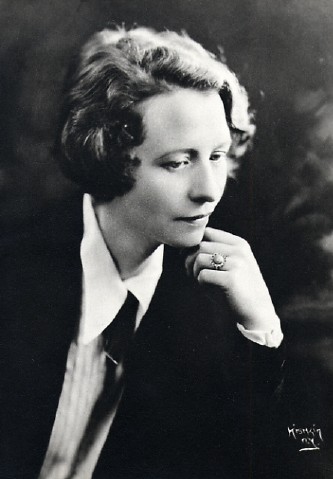
Edna St. Vincent Millay

Edna St. Vincent Millay was born in 1898 and died in 1950. Raised by a strong mother, who divorced her incompetent father, Millay grew up, reading classical literature and scoffing at the demands of authority. Perhaps as a result of her unconventional upbringing, Millay continued to flout the demands society placed on women. She was openly bisexual and turned down Edmund Wilson's (her editor) proposal of marriage because she feared domesticity would inhibit her development as an artist. Millay displayed an immense vivacity and plunged herself into her experiences unreservedly. Perhaps as a result of her uninhibited thirst for life and the longing for fulfillment that such a lifestyle connotes, Millay developed a remarkable ability to capture an immense sense of loss and incompletion. This ability is vividly evident in the poems quoted below. (For a more detailed bio, see: http://www.poetryfoundation.org/bio/edna-st-vincent-millay)


What lips my lips have kissed, and where, and why

What lips my lips have kissed, and where, and why
I have forgotten, and what arms have lain
Under my head till morning; but the rain
Is full of ghosts tonight, that tap and sigh
Upon the glass and listen for reply,
And in my heart there stirs a quiet pain
For unremembered lads that not again
Will turn to me at midnight with a cry.
Thus in the winter stands the lonely tree,
Nor knows what birds have vanished one by one,
Yet knows its boughs more silent than before:
I cannot say what loves have come and gone,
I only know that summer sang in me
A little while, that in me sings no more. 

[I would call this poem a lament, a lament for the self. What does the poet know? Nothing, except that something lovely and happy has gone out of her. And so, she laments, not for her forgotten lads, but for past selves, forgotten and lost, that tap and sigh upon the glass.]


What Savage Blossom

Do I not know what savage blossom only under the pitting hail
Of your inclement season could have prospered? Here lie
Green leaves to wade in. And of the many roads not one road 
    leading outward from this place
But is blocked by boughs that will hiss and simmer when they 
    burn--green autumn, lady, green autumn on this land!

Do I not know what inward pressure only could inflate its petals 
    to withstand
(No, no, not hate, not hate) the onslaught of a little time with 
    you?

(No, no, not love, not love) Call it by name,
Now that it's over, now that it is gone and cannot hear us.

It was an honest thing. Not noble. Yet no shame.

[This poem also connotes a kind of grief. It is a concession to the poet's weakness; she herself is no savage blossom. Which makes us ask, what is she? An ordinary blossom? Lovely and fragile. I've often looked at my rose bushes after the rain and loved how red the ground became from bruised petals. But even in the bringing forth of a new beauty, the old one is destroyed. The blossom is broken by the rain, by the hail. So, we are left with a broken poet, who boldly proclaims that there is no shame. But, why, if there is no shame, we ask, must she so boldly announce it?]